Ninja Creami vs ice cream maker: which is best for your kitchen?
Ninja Creami vs a traditional ice cream maker is really a choice between two ways of making dessert: freeze the base first and spin it later, or churn a liquid base while it freezes. The Creami suits planners who like experimenting with flavours; a compressor or freezer-bowl churner suits people who want classic custard-style ice cream, often on the same day. With an Australian summer coming, here's how the three main types compare and which one fits your kitchen.
The three types at a glance
| Ninja Creami | Compressor ice cream maker | Freezer-bowl churner | |
|---|---|---|---|
| How it works | Shaves and blends a base frozen solid in a tub | Built-in freezer chills while a paddle churns | Paddle churns inside a bowl you pre-freeze |
| Planning ahead | Freeze each base for about 24 hours | Little or none | Freeze the bowl beforehand |
| Back-to-back batches | Yes, if you have spare frozen tubs | Yes | No, the bowl needs refreezing |
| Bench and storage | Tall and narrow | Large and heavy | Compact, but the bowl needs freezer space |
| Best at | Sorbets, mix-ins, small single batches | Classic ice cream and gelato | Occasional classic batches |
How the Ninja Creami works
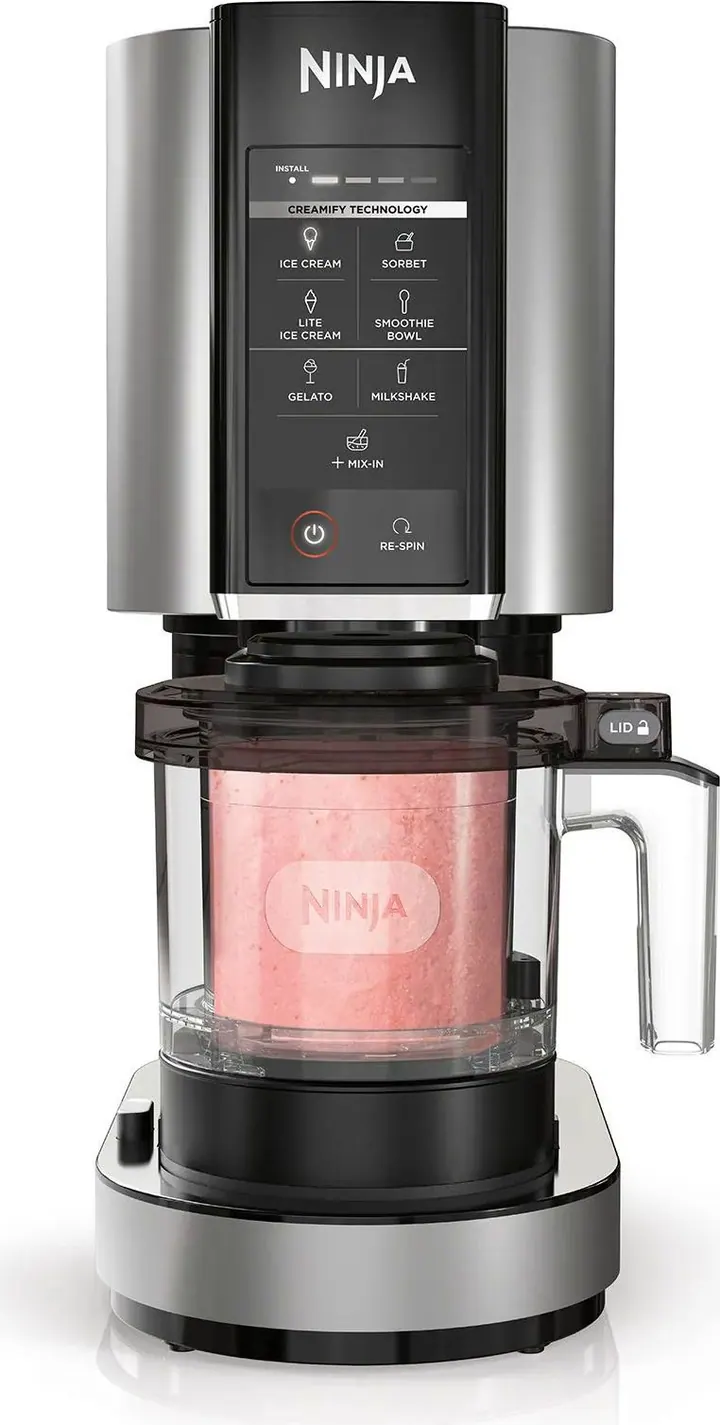
The Ninja Creami NC300 turns the usual process around. You make a base, pour it into a 470 ml tub and freeze it solid. SharkNinja says the base needs about 24 hours in the freezer and should sit between -12 °C and -21 °C before processing. The tub then goes into the machine, where a paddle shaves down through the frozen block. Programs run for 1 to 6 minutes, with settings for ice cream, lite ice cream, sorbet, gelato, milkshake and smoothie bowl, plus Mix-In and a Re-Spin for crumbly results.
The upside is flexibility. Because each tub is a separate batch, a household can keep a few different flavours in the freezer and spin one when it's wanted. The downside is the planning: without a frozen tub ready, there's no dessert tonight. Spare tubs help, but check they match your model, because SharkNinja says tubs aren't interchangeable across every Creami range.
How a compressor ice cream maker works
A compressor ice cream maker has its own refrigeration unit, a bit like a tiny freezer with a churning paddle. You pour in a chilled liquid base, switch it on, and it freezes and churns at the same time, so you can make dessert on a whim and run several batches in a row.
The trade-offs are size, weight and noise. Compressor machines are bulky, usually live on the bench or in a deep cupboard, and cost more than freezer-bowl models. They're at their best with traditional custard bases and gelato, where churning air into the mix is the point. Check the listing for bowl capacity and whether the bowl is removable for cleaning.
How a freezer-bowl churner works
The freezer bowl ice cream maker is the budget route. A double-walled bowl filled with coolant goes into the freezer, usually overnight, then a motorised paddle churns your base inside it. Results with classic sugar-and-cream recipes can be very good.
The catch is that one frozen bowl gives you one batch. If you want a second flavour, you wait for the bowl to refreeze, and it needs a flat, level spot in a freezer that may already be full in summer. If you own a stand mixer, a KitchenAid ice cream maker attachment works the same way; check it fits your mixer model before buying.
Which one suits you?
- Pick the Creami if you like small batches, sorbets from overripe summer fruit, mix-ins and dairy-free experiments, and you don't mind freezing tubs a day ahead.
- Pick a compressor machine if you want classic ice cream or gelato the same day, make bigger batches for family or guests, and have the bench or cupboard space.
- Pick a freezer-bowl churner if you make ice cream a few times a summer, want something compact, and are happy with one batch at a time.
If the Creami is the front-runner, our guide to whether the Ninja Creami is worth it covers who it suits and the trade-offs owners commonly mention in more detail.
Texture: what to expect
Churned ice cream gets its texture from air whipped in as it freezes, which is why classic recipes come out light and scoopable. The Creami processes a solid block instead, so it copes with bases that would turn icy in a churner, but very cold bases can come out powdery on the first spin; SharkNinja's answer is the Re-Spin button. Leftovers from any machine set harder in the freezer than shop-bought tubs.
Noise, cleaning and space
The Creami is loud for its short cycles, similar to a powerful blender. SharkNinja lists every part except the motor base as top-rack dishwasher safe. Compressor machines run for much longer per batch, with the steady hum of the built-in freezer. Freezer-bowl churners are generally quieter, though the bowl usually needs hand washing. Measure your bench height for the Creami, which stands 40.5 cm tall, and your freezer for whichever bowls or tubs it will need to hold.
Bottom line
There's no single best ice cream maker for every Australian kitchen. The Creami wins on variety and small batches, compressor machines win on same-day classic ice cream, and freezer-bowl churners win on price and size. Check the current price of each before deciding, as all three types are common sale items in the lead-up to Christmas. Looking for summer gift ideas instead? Our Christmas gift guide has more.
FAQ
Is the Ninja Creami better than an ice cream maker?
Not better, just different. It's more flexible for small batches and unusual bases, while a compressor or freezer-bowl churner makes classic churned ice cream with less planning per batch.
Do I need to freeze anything before using a compressor ice cream maker?
No. That's the main appeal: the built-in freezer chills the base as it churns. Chilling the base in the fridge first still helps.
How long does the Ninja Creami take?
The spin itself takes 1 to 6 minutes, depending on the program. The base needs about 24 hours in the freezer first, according to SharkNinja.
Can I make sorbet in a freezer-bowl ice cream maker?
Yes. Sorbet bases churn well in a freezer bowl, though very low-sugar recipes can freeze icy in any churner.